
jueves, 29 de enero de 2015
Coloured textile

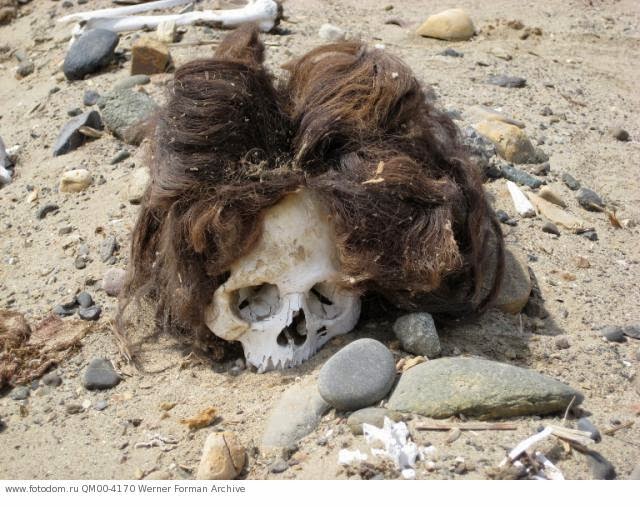
Pre-Columbian skull

viernes, 23 de enero de 2015
Skeleton of a man.

CAT MUMMY
CAT MUMMY
The mummy of a cat, symbolic animal of Bastet. Radiography has revealed a lump of small bones and ribs.
The bandages are highly decomposed.
MUSEO ARQUEOLÓGICO NACIONAL
globalegyptian museum

The mummy of a cat, symbolic animal of Bastet. Radiography has revealed a lump of small bones and ribs.
The bandages are highly decomposed.
MUSEO ARQUEOLÓGICO NACIONAL
globalegyptian museum
mummy

PTOLEMAIC PERIOD
MUSEO ARQUEOLÓGICO NACIONAL
globalegyptianmueum
BIRD: BIRD MUMMY

MUSÉE ROYAL DE MARIEMONT
ROMAN PERIOD: PTOLEMAIC PERIOD
globalegyptianmuseum
King Seqnenre-Taa


The body of this king, who died in his forties, was poorly preserved. However, the brain is still in the cranial cavity and the mummy's mouth still has a complete set of healthy teeth.
The king's head is covered with horrific wounds: a dagger thrust behind the ear, after which, perhaps, blows rained down upon him. Mace blows smashed his cheek and nose and a battle-axe cut through the bone above his forehead.
EGYPTIAN MUSEUM
globalegyptinmuseum

Mummified head of Seqenenre Tao
The mummy was unwrapped by Gaston Maspero on June 9, 1886. A vivid description by Gaston Maspero provides an account of the injury that was done to the pharaoh at his death:
“ ...it is not known whether he fell upon the field of battle or was the victim of some plot; the appearance of his mummy proves that he died a violent death when about forty years of age. Two or three men, whether assassins or soldiers, must have surrounded and despatched... him before help was available. A blow from an axe must have severed part of his left cheek, exposed the teeth, fractured the jaw, and sent him senseless to the ground; another blow must have seriously injured the skull, and a dagger or javelin has cut open the forehead on the right side, a little above the eye. His body must have remained lying where it fell for some time: when found, decomposition had set in, and the embalming had to be hastily performed as best it might


The mummy was unwrapped by Gaston Maspero on June 9, 1886. A vivid description by Gaston Maspero provides an account of the injury that was done to the pharaoh at his death:
“ ...it is not known whether he fell upon the field of battle or was the victim of some plot; the appearance of his mummy proves that he died a violent death when about forty years of age. Two or three men, whether assassins or soldiers, must have surrounded and despatched... him before help was available. A blow from an axe must have severed part of his left cheek, exposed the teeth, fractured the jaw, and sent him senseless to the ground; another blow must have seriously injured the skull, and a dagger or javelin has cut open the forehead on the right side, a little above the eye. His body must have remained lying where it fell for some time: when found, decomposition had set in, and the embalming had to be hastily performed as best it might


Suscribirse a:
Entradas (Atom)